Ads

Showing posts with label permaculture. Show all posts

Wednesday, 10 August 2011

Permaculture advises: shadow tolerant vegetables

A full day of sunshine is about 14-15 hours However, some vegetables can do with less time of sunlight.
This is very useful if you plan a garden in the shadow, if you grow a garden in a urban setting for example, in a location not facing south, or under trees such in a forest garden.

Tolerant of 4-6 hours of sun
Herbs: Bay, chives, horseradish, mint and parsley
Vegetables: Broccoli, swiss chard, cress, kale, kohl rabi, lettuce, leafy perennials, radish, spinach, welsh onions
Fruits: Gooseberries, red currants, rhubarb, loganberries and morello cherries

Tolerant of 6-8 hours of sun
Herbs: Fennel, rosemary, sage, thyme (also lovage)
Vegetables: cabbage, beets, cauliflower, carrots, leeks, onions, parsnips, peas, potatoes, runner beans, broccoli and turnips. Celery and chicory also do pretty well, but chicory prefers full sun. Even perennials such as Yacon can crop perfectly (in a good soil) with as little as 4-5 hours of sunlight. And as I showed you in 2009, tomatoes and cucumber can crop enough with even less than 6 hours of direct sun. Tomatoes yields will of course have reduced yields, but cucumbers can produce good if they have good soil and warm weather. 
Fruits: Strawberries, blackcurrants, kiwi, raspberries and white currants.

It might be good, if you are growing your vegetables in part shade, to cultivate them in raised beds, to avoid excess humidity in the soil. Take care also with slugs, as they love crawling in the shadow. Protect  your vegetables with  two effective slug barriers! Either by putting cut plastic around your plants, or by spreading sawdust.


The vegetables that would need the most sun and warm would be sweet peppers, eggplant and pumpkins, squash and zucchini.


Remember to click here to be notified of future new articles at the Green Spot!

And click here to read more articles about permaculture gardening

Saturday, 6 August 2011

Permaculture advises: growing a minimalist garden (that requires the least amount of work!)

If you are those kind of people that prefer to start the garden and then do nothing, this is for you.
This is a list of plants to make a permaculture edible garden, made of perennials, that once you start, there is almost no further work required. Some vegetables are perennials, other are self-seeders.


Some plants for a minimalist garden:

Perennials for greens (spacing indicated)

  • 9-star broccoli .... 100cm
  • Daubenton's kale ... 60 cm
  • Good king henry (bitter taste) .... 30 cm
  • Sea beet (tolerates sandy soils) .... 30 cm
  • Tree collards .... 100 cm
  • Skirret .... 25 cm
  • Sea kale .... 90 cm
Perennials for salad use
  • Ḿitsuba (can grow in part shadow) .... 15 cm
  • Musk mallow .... 30 cm
  • Pink purslane (acid soil, and shadow) ... 15 cm
  • Salad burnet (alkaline soil) .... 20 cm
  • Chicory .... 20 cm
  • Garlic cress ... 30 cm
  • Ramsons or wild garlic (for shadow) ... 10 cm
  • Sorrel ... 25 cm
  • Turkish rocket ... 50 cm
  • Watercress ... 15 cm
  • Everlasting onions ... 15 cm
  • Tree onions .... 20 cm
  • Welsh onions .... 20 cm

Perennial 9-star broccoli, can give many crops if you keep cutting them.
Self-seeders for greens

  • Fat hen 
  • Swiss chard ... 25 cm 
  • Alexanders .... 50 cm
Self-seeders for salad use 
  • Chickweed (can grow in part shadow) ... grow without thinning
  • Lamb's lettuce ... 10 cm
  • Winter purslane (tolerates sandy soils) ... 15 cm
  • Bittercress ... 10 cm
  • Land cress ... 15 cm
  • Nasturtium ... 15-20cm
  • Rocket ... 10 cm

The following table can help you calculate how many plants do you need to get full ground cover with perennials. The recommended spacing is described later below.

Spacing, cm ---- Plants
100 ................... 1
60 ..................... 3
30 ..................... 11
25 ..................... 16
20 ..................... 25
15 ..................... 44
10 .................... 100


Remember to click here to be notified of future new articles at the Green Spot!

And click here to read more articles about permaculture gardening

Wednesday, 3 August 2011

Permaculture advises: increasing biodiversity

Biodiversity is a very much sought goal nowadays. Increased biodiversity is good for most species, and creates more sustainable habitats, and also gardens. Not only creates fun in growing and observing many species growing together, but it also reduce pests, help in fruit pollination, and can increase soil fertility and balance.

Increased wildlife will gain from different habitats in your garden, such as ponds, grass, cornfield flowers and trees and shrubs. Cornfield wild flowers attract butterflies and bees and provide much color.


Some species will work as service stations for passing wildlife such as birds and butterflies, such as buddleia (supports a big number of butterflies and bees), cotoneaster (abundant berries), evening primrose (food for moths), muscaris and lunaria (early nectar flowers), guelder rose, hawthorn, ivy, chaenomeles, willows, michaelmas daisy (late autumn nectar plant) and teasel, dipsacus (pollen plant, birds).

For birds, nest boxes and drinking water (such as in ponds) is very useful. Edible native herbs include chickweed, sorrels, nettles (good for butterflies), ramsons or wild garlic and several types of berries. These might be a preferred choice.


Some of the trees that are associated with increased biodiversity (in UK) are willows, oaks and birches. A single tree of these can harbor more than 300 different species of insects. Other trees good for biodiversity include poplars, hawthorn, alder, crab apple, hazel and beech. Native species such as these, naturally harbor much more biodiversity than exotic species. Exotic species can also harbor many insects such as Norway's spruce, but others will generally contain little insect life such as black locust, walnuts and chestnuts. Therefore, for other countries, it might be that other trees will be better for increased biodiversity, most likely their native species.

Another word of caution with exotic species is if they become overly invasive. Invasive species are second only to habitat destruction as a contribution to extinction and the alarming loss of biodiversity! These are likely to be species which can adapt very successfully to the local climate and propagate by runners, rhizomes or aggressive seed dispersion. Often it can be nitrogen fixing species such as lupins and mimosa. Be careful with other species such as rhododendron, eucalyptus, acacia or black locust.


Remember to click here to be notified of future new articles at the Green Spot!

And click here to read more articles about permaculture gardening

Friday, 29 July 2011

Permaculture advises: windbreaks

In Permaculture, windbreaks help shelter plants from the elements. These can be walls, or made from shrubs or trees.

Windbreaks increase water, protect against soil erosion, provide leaf fall and a microclimate by increasing humidity, shadow and protecting against damaging winds (and drying winds) and even deflecting frost, protect against animals or other humans, increase biodiversity (by for example providing an edge habitat for birds) and might offer produce in form of food, wood or fodder.

Disadvantages of using windbreaks include increasing pests and diseases (by increasing humidity), can also form a frost pocket, undesirable shadow, and root competition (roots of trees usually extend at least twice the length of their branches). Root competition can occur with eucalyptus, poplars and willows and be a problem only your garden space is small.

Windbreaks should have the right angle against wind, and not be full impermeable to wind (as this causes stronger winds a few meters away). But it should not let the full wind pass through either. This can happen if you have only trunks to shelter the wind. In that case, shrubs should be planted mixed with the trees. The ideal is to cover 50-80% of the view. This will reduce winds by about half, within a distance of ten times the height of the windbreak. In this sheltered area, the temperature can rise up to 2ºC more. In terms of length, the windbreak should be at least ten to twenty times more than its height.

Now, I will tell which trees species to choose for a specific height
30m or more: beech, poplars, sycamore, conifers, oaks, chestnuts
25-30m: ash, wild cherry, white willow, black locust
15-25m: alders, aspen, birches, yew
up to 15m: hawthorn, holly, maple, rown
up to 10m: apples, cherry, hazel, elders, grey willows
up to 5m: blackthorn, buckthorns, eleagnus, siberian pea
up to 3m: sea buckthorn, wild roses


In terms of growth, poplars and willows will grow up to 2m per year; alders, ash, birches, sticka spruces and larch will grow up to 1m per year; maple, sucamore, cherry and cedar will grow about 50cm, and oaks, beech, limes, pines and holly will grow less.

Good windbreaks for coastal areas include sycamore (drought tolerant), ash, holm oak, lodgepole pine (tolerates cold), sitka pine, cupressus macrocarpa (for warm climates). Shrubs include elagnus (edible berries, fix nitrogen), siberian pea (prefers cold, edible seeds), elder (easy to propagate, tough), ramanas rose (for severe winds, edible fruits), tamarisks, salt brush (warm areas, edible leaves), blackthorn and sea buckthorn (invasive species).

This was just the beginning of a long series of articles about Permaculture, because I am reading "The Earth Care Manual" by Patrick Whitefield.

Please look forward for my next posts!
Remember to click here to be notified of future new articles at the Green Spot!

Monday, 25 July 2011

Gardening and Permaculture in ICELAND

Permaculture is in fact possible in Iceland, a polar climate.

I first moved here last year, and did grow two small gardens in Reykjavík, which is by the coast, and with a ever cool and often rainy climate. One garden was successful with carrots and radish (carrots grow very well in the cool polar summer) although potatoes were very small. Another garden was cultivated with herbs and diverse vegetables. After the harsh polar winter, I was surprised to visit the area again and found out that some plants were alive and nicely growing again! These were mints, chives, rhuibarb (a almost native vegetable in Iceland), and even some celery plants!

This year, I moved to Sólheimar ecovillage, which is located in southwest Iceland, with a milder polar climate: summer are short, cool but generally fair, the winters have much snow. I am growing both indoors, a south facing conservatory, and outdoors, in a southwest facing exposed location and a northeast sheltered location.


Indoors I grow the seedlings, dwarf varieties of tomatoes, peppers and eggplants, a ginger plant, swiss chard, rucula and diverse herbs (spring onions, thyme, salvia, lemon balm, hyssop, savory, oregano, marjoram and basil). I also grew some zuchinni and cucumbers but even with big pots, these did not crop good.


Outdoors, I grow several beds: one with onions, carrots and beets; another with celery, fennel, broccoli and chicory, another with turnip and other greens, and another bed with a beautiful combination (companion planting) of swiss chard, beets and kohl rabi (below).


I found very difficult to grow the brassicas, radish, lettuce, fennel and spinach, because the 24 hour daylight, often induced their bolting. Initially the peas were also not growing well. However, they are now cropping good, as the weather is warmer. What is growing perfect are the carrots, celery, beets, kohl rabi, swiss chard and onions. Below is the bed with beets, carrots and onions.


The most beautiful is two beds with wildflowers to attract wildlife such as bees and butterflies and provide plenty of color. Some examples of the flowers include cornflower, anemona, buttercups, tagetes, scabious, love in the mist, and poppies.


In the shadowy northeast location, I am growing some beds with oriental brassicas, which are faring better (but recently have started bolting too - picture below), and the naturalized Icelandic vegetables, lovage and rhubarb, which are grow easily and very well.


The potatoes there are growing better too, I think it's because the soil is better and the location more sheltered from the cool dry winds. I also made an edge with some shrubs, berries, potentilla and other flowers. Unfortunately, there were some Jerusalem artichokes but these were accidentally cut by a neighbor mowing. More picture to follow soon.

Click here to read about more other permaculture articles at the Green Spot Blog


Remember to click here to be notified of future new articles at the Green Spot!

Sunday, 5 June 2011

Enriching your soil, part I: Organic fertilizers for your vegetables and flowers! (Compost tea, egg shells, banana skins, nettles, seaweed, urine)

How to make simple homemade organic fertilizers!

This article is the first of a series that will teach us how to enrich our soil, from a Permaculture /Biodynamic perpspective.

To start with, below are some simple steps we should follow when growing vegetables and flowers:

  • First, when you plant, remember to incorporate compost and sand into the soil, to provide nutrients. Cover also with mulching, and add egg shells and coffee grounds around plants (you can also dilute the coffee ground in water and apply to acid-loving plants like tomatoes, azaleas, roses and blueberries)
  • Fertilize heavy feeders (tomatoes, zucchini) with a seaweed fertilizer (add seaweed to water, let sit for 2 weeks, and dilute before use). Fertilize occasionally green leaf vegetables with diluted urine (1:20, and use immediately). If you eat fish or meat, you can also prepare a fertilizer made from bones and from fish leftovers, because it is very rich for your plants.
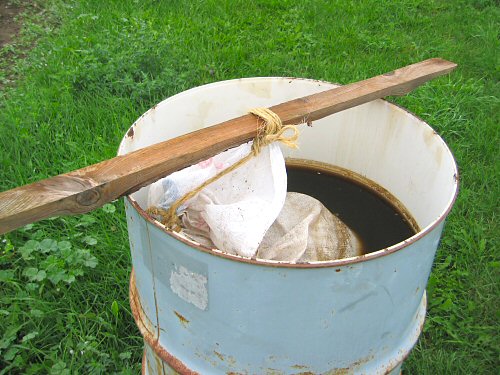
  • Fertilize adding regular doses of compost tea (add compost to water, and let sit for 2 weeks, dilute before use). Spray on plants for a foliar feed and to eliminate pests. Fertilize occasionally with a tea made from composted nettles (do as the compost tea). Comfrey is also very good. You can also add banana and potato skins as these are full of nutrients, especially potassium. The best is to mix everything together: compost, nettles, comfrey, banana and potato skins, and other herbs that accumulate specific nutrients like docks or ferns. Remember that this will smell bad, so let it sit for the 2 weeks in some hidden place. And dilute this black compost tea before use.
  • Fertilize with a spray or tea made from herbs used in Biodynamic farming: dandelion, yarrow, nettle, horsetail, chamomile, valerian and oak bark. Some of these plants also accumulate nutrients, and according to Rudolf Steiner, they release "energies" into the soil which are very beneficial to your vegetables. Remember to use those weeds!

Sunday, 24 April 2011

The Green Spot has returned!! This time, in Iceland!

And after one year after without gardening, we finally manage to live in a place with a garden space, this time in Iceland, at the ecovillage Sólheimar, where we presently happily live and work.


We have a heated greenhouse-like balcony, facing south, and a small space in front of the house. In just 3 weeks, we started from zero and we are growing now about 150 pots with flowers and vegetables!


I just brought all my seeds, and sown them in eight trays. The temperature indoors is around 22ºC, due to Icelandic geothermal house heating, which makes it perfect for growing vegetables inside.


We reuse hundreds of plastic cups, and also yogurt trays, to where we transplant the tiny seedlings, and while we wait that the weather warms outside (it still snows). This is practical, free and environmental friendly!


The list counts with tomatoes, sweet peppers, eggplant, courgette, oriental salads, lettuce, rucula, spinach, chicory, beets, swiss chard, broccoli, kale, kohl-rabi, celery and celeriac, peas, ginger, several mixes of butterfly and wild flowers, aromatic herbs, and some permaculture rarities such as perennial broccoli ("9 star") or the strawberry spinach (chenopodium capitatum). Below, we show some oriental vegetables such as  pak choi, mizuna, tatsoi or komatsuna spinach, ideal for stir-fry.


We are also attempting to establish some perennial flowers outdoors, such as anemones, ranunculus, dicentra, astilbe and day-lilies. I sown poppies, aquilegea,. campanula, delphinum and nicantra physaloides. And I am trying to grow also allium ursinum, atriplex, jerusalem artichokes, scorzonera, salsify, purple carrots and black potatoes. I have sown some of these indoords, in a dish with wet paper, to see if I could sprout them faster, for later transplanting, when the danger of frosts has passed.


This is a true challenge of Permaculture in polar climates! The weather is still cold and windy. Finally, we wish we could improve our food self-sufficiency, and create in this polar landscape, some color and biodiversity. Let's see how this green experience will run!

Please feel free to subscribe for future posts, by adding your email address in the above bar.

Thursday, 11 November 2010

Holzer and Mollisson Permaculture. Other inspirational people.

Check these articles and videos for inspiration.
Just 20 minutes of your time!

Hozler miracle of growing forest garden in Austrian mountains
http://www.celsias.com/article/permaculture-miracles-in-the-austrian-mountains/

An inspiring interview with Bill Mollison, the founder of Permaculture
http://www.scottlondon.com/interviews/mollison.html

Fukuoka interview in how to green a desert
http://www.context.org/ICLIB/IC14/Fukuoka.htm

Fukuoka teaches us to make seed-balls. Agriculture for lazy people ;) And Nature-friendly.
http://www.youtube.com/watch?v=A4-bwW8PWI0

More Hozler inspiration videos. See its beautiful farm!
http://www.krameterhof.at/index.php?id=videos

John Seymour Bible to Self-Sufficiency!
http://www.amazon.co.uk/New-Complete-Book-Self-Sufficiency-Realists/dp/0751364428

Rudolf Steiner free lectures on Biodynamic Agriculture
http://wn.rsarchive.org/Lectures/Ag1958_index.html

An inspiring (and awakening) video in how biodynamic agriculture may help save the world
http://www.howtosavetheworld.co.nz/

The inspiring project of PFAF, 7000 plants for a future (useful and edible)
Don't say you don't have the free information!!!
http://www.pfaf.org/

The amazing urban garden project of Path to freedom.
Have a small garden and become self-sufficient. Produce tons of food in a small space!
(See the amazing photo gallery)
http://www.pathtofreedom.com

The spiritual community of Findhorn. They grew vegetables on sand just by following the advice of listening to plant spirit guides, called the devas.
http://www.spiritofmaat.com/archive/aug3/findhorn.htm

Earthships: High-tech green house design, entirely self-reliant, based in Permaculture principles
http://www.earthship.net/

Example of Robert Hart, inventor of the "forest garden" concept. See photos of his garden
http://www.spiralseed.co.uk/forestgarden/pictures/index.htm

Saturday, 6 November 2010

Permaculture documentaries for free

For anyone interested
please see this series of permaculture documentaries
for each kind of habitat, situation: desert, tropics, temperate lands, cold places, urban...
each doc is about 30min and divided in two or three parts
great inspiration and practical ideas!

THE PERMACULTURE CONCEPT AND SCENARIOS:


then i add two other very interesting videos!

RAINWATER HARVESTING:


BACKYARD SELF-SUFFICIENCY:


If you are interested in these topics, please feel free to subscribe to the blog (see the right column) to receive the latest updates in your email!


Monday, 25 October 2010

Alternative edible vegetables, for Permaculture use!

This is a post intended to show some useful and less well-known plants in Permaculture. These are edible perennial vegetables, that can often produce huge harvests, and are easy to grow, and can be used in a permanent forest garden Permaculture project. I included the links where you can order these. Have fun.

Ordering tropical, fruits, vegetables and seeds:
http://www.tropilab.com/tropicalfruit.html
http://www.seedsofchange.com (lots of seeds, but they don't send to Europe)

Alternative edible tubers
http://www.bbg.org/gar2/topics/kitchen/2003su_tubers.html
http://www.pfaf.org/leaflets/altroots.php PFAF, database on edible plants
http://www.glasshouseworks.com/trop-o.html

These are some edible tubers, grown as crops in South America, in a similar way to potatoes:
Besides these rarities, there are other less-common vegetables, but which are worth to be grown in a vegetable garden, such as parsnips, sweet potatoes, ginger, jerusalem artichokes, swedes, scorzonera, parsley roots (Petroselinum crispum tuberosum), different kinds of radish, kohl-rabi and celeriac. We have grown most of these plants before, if you need advice just email me. You can also watch our pictures in previous posts.

Fantastic carrots!
Another interesting thing to know is that there are plenty of (natural) varieties of carrots. No, they are no hybrids, these are tradicional varieties, which are now rarities, but available through some sellers of heirloom seeds. These include white, yellow, orange, red and purple carrots.


All the cited tubers are of course perfect for vegetarians, vegans and even rawists, wishing to improve their dishes, because most can be eaten raw and fresh!

Yacon

At the PFAF website, which I recommend all of you to visit, there are other interesting suggestions for edible root vegetables:
You might wanna check also these two interesting links:
- Top20 Permaculture plants http://www.pfaf.org/user/top20plants.aspx

Last, please feel free to subscribe for updates of the blog, see the right column!


Thursday, 21 October 2010

Interesting Permaculture video and ideas

The authors show the use of animals to eat pests (turkeys to eat grasshopers, ducks and lizards eat slugs and snails, chicken eat the apple larvas)

In this video, found also a tree from himalaias, with lemon tasting fruit that cures cancer, a fern used as compost nitrogen activator, and a perfect edge schrub, with edible fruits and seeds.

Finally, the use of bamboos - fast growth and huge tensile strenght, they withstand the strengh of earthquakes, hurricanes or tsunamis, and provide also lots of others uses (e.g. around dam lakes) or are edible!


Please visit also our new blog on ecovillages http://theecovillagerevolution.blogspot.com


Sunday, 31 January 2010

Important influences to Organic Farming, Permaculture, Self-sufficiency and Environmentalism


Henry David Thoreau (USA, 1817-1862)

"Live at home like a traveler"


T
horeau was an American philosopher, poet, historian and naturalist. Thoreau is best known for his book Walden, a reflection in simple living in a natural environment, and self-sufficiency in the woods. Walden is a declaration of independence, self-reliance and spiritual discovery. Thoreau describes his two year stay in a cabbine, in a forest on a edge of a town, living a simplified life, and discussing his needs of shelter, food, clothing and money.
Thoreau was a leading Transcentalist philosopher, with a core belief that there is a spiritual state that transcends physical reality and can only be realized through the invidual's intuition rather than religious doctrines. He was also one of the founders of modern Ecology and the environmentalist movement, studying the growing patterns in fields and woodlots. He was also greatly interested in the accounts of travellers of that time, such as Cook, Magellan and Darwin.
Thoreau is also well known to have introduced Civil Disobedience as a method of non-violent protest and resistance, that later influenced Gandhi and Martin Luther King.
During a time of a great industrial revolution and urbanization, Thoreau was one of the first ones to call for a return to nature, and to a more simplified, liberating and natural way of living.


Rudolf Steiner (Austria, 1861-1925)
“A healthy social life is found only, when in the mirror of each soul the whole community finds its reflection, and when in the whole community the virtue of each one is living”


Steiner was an Austrian philosopher, social thinker, architect and esotericist. He founded the spiritual movement of Anthrosophy, which is a continuation of the European Transcendentalism. Steiner attempted to find a synthesis between science and mysticism. He provided a bridge between the cognitive thinking of western civilization with the inner and spiritual needs of the human being. He created a revolution in many fields, such as architecture and visual arts, performing arts, (Waldorf) education, medicine and also agriculture.
Steiner invented the concept of biodynamic farming and gardening, which is one of the first sustainable forms of agriculture. He was concerned about the impact of chemical agriculture on the environment and the loss of nutrients on the soil. Steiner encouraged organic practices such as the use of manure, composting, and achieving the right balance between the different species of plants and animals on a farm. He stated that the use of chemicals on agriculture was very detrimental. He also analysed the spiritual energies underlying the growth of plants, influenced by the planets, and the life energy elements on the soil, which were recorded in a serie of his lectures. This marks not only a natural approach to agriculture, but also a spiritual and hollistic one, where all the life forms are respected and in the proper balance.

Sir Albert Hobert (UK, 1873-1947)
"The health of soil, plant, animal and man is one and indivisible"

Hobert was a Botanist and considered the father of organic farming. He travelled to India to teach western conventional farming but came convinced about the importance of healthy organic and natural practices of farming to the health of local populations.


Masanobu Fukuoka (Japan, 1913-2008)
"If we throw mother nature out the window, she comes back in the door with a pitchfork."


Fukuoka was trained as a microbiologist and a soil and plant scientist. At the age of 25 he began (like me) to doubt the wisdom of modern agricultural science. He eventually quit his job after having a moment of great insight in one night, returned to his family farm and developed a pioneering no-till form of organic agriculture. Although he practiced organic agriculture, he took a step farther in not only growing without any pesticides, herbicides, but also without any significant weeding or tilling.
Fukuoka asserted that there is a great difference between organic farming and natural farming; in that organic farming was still scientific in approach like conventional farming, and could still damage the environment. Fukuoka wished to reproduce natural conditions as close as possible. He emphasizes on mainting diversity. On his method with no plowing, the seeds germinated when the provided conditions were right. Ground covers of clover provided nitrogen; weeds considered part of the ecosystem but periodically cut (not weeded) to allow the nutrients to return to the soil without disturbing it; the crops are grown one after the other, but the ground is always covered (therefore allowing the retention of humidity and life beneath it); straw is used as mulching. He detailed his findings in his famous book "The one-straw revolution".
Fukuoka was also a pioneer in the development of seed balls: the seeds are mixed with clay, water and compost and thrown into the soil, allowing germination without tilling.


John Seymour (UK, 1914-2004)

Seymour was a leading figure of the self-sufficiency movement during the sixties and seventies. At the age of 20, he went to South Africa and live through a sucession of jobs. There, we also contacted with the self-reliant life of bushmen tribes, where we spend some time and created a friendship with them, and learn about their life as hunter-gatherers. Later, he was living aboard a sailing boat where he felt he needed to settle down in a land-based life as his first daughter was growing older. He then began living and writting his experiences while living a self-sufficient life with his family on rural smallholdings, in many books on the subject. Seymour was also an opponent to genetic modified food and industrialization, and an environment activist.


Bill Mollison (Australia, 1928-)

"Though the problems of the world are increasingly complex, the solutions remain embarrassingly simple."


Bill Mollison is a researcher, ecologist, naturalist and teacher, and the father of Permaculture. Permaculture is a system of permanent and sustainable agriculture, and also an integrated system of economics, self-sufficiency for local communities, human interaction and ecology. His legacy resulted on the creation of many permaculture farms and communities all around the world, adapted to many different climates.


Mike Reynolds


Reynolds is a architect based in New Mexico and a radical proponent of sustainable living and self-sufficiency. He developed a completely new self-reliant and ecologically friendly system of houses, called Earthships. These houses are made from natural materials, recycled materials, and can mantain a confortable indoords temperature even in very cold or very hot climates. The house collects and recycles water, allows food production and is equipped with solar and other alternative methods for independent production of energy.

More people will be added in the future. Suggestions are welcome!

Thursday, 24 September 2009

List of our (easy to grow) perennial vegetables

Permaculture is great!
Contact if you are interested in getting these.
  • Good King Henry
  • Nettles
  • Tiger Nuts
  • Jerusalem Artichokes
  • Chinese Artichokes
  • Skirret
  • Taro
  • Yacon
  • Horseradish
Our annual vegetables
  • Tomatoes
  • Peppers
  • Cucumbers
  • Squash
  • Pumpkin
  • Beans
  • Lentils
  • Lettuce
  • Rocket
  • Spinach
  • Endive
  • Chicory
  • Celery
  • Celeriac
  • Kohl-rabi
  • Turnip
  • Root parsley
  • Brocculi
  • Brussels sprouts
  • Garlic
  • Wild garlic
  • Potatoes
  • Carrots
  • Parsnip
  • Salfisy
  • Scorzonera
  • Gengir
  • Beets
  • Swiss chard
  • Eggplant
  • Wheat
  • Millet
  • Quinoa
  • Soy beans
  • Chick peas
  • Peas

Wednesday, 23 September 2009

Our vegetables in the garden...

Here are the most recent photos of our organic urban Permaculture garden.
We have now pumpkin, cucumber, peppers, celery, beets, swiss chards, jerusalem artichokes, sweet potatoes, potatoes, lentils, beans, yacon, tiger nuts, skirret and taro.


Sunday, 6 September 2009

Self-sufficient gardening - Growing vegetables in a shade garden

Today we harvested a few more vegetables from the garden.
We harvested potatoes (which were grown under only 2 hours of sunlight!), plenty of celery, plenty of cucumbers (in half-shade), and a few tomatoes (which are now slowing due to the lack of sunlight). The tomatoes in shade grow, but the fruits stay green and grow slowly. However, with just 3 hours sunlight, the plants gave a nice crop.

Our pumpkin plant is growing very long, it has several female flowers, let's hope that we can harvest in a couple of months a dozen of nice muskat de provence pumpkins!

I cut the zucchini. The plants were not cropping anymore, due to the lack of sunlight. I guess they are not adequate to shade gardens, and occupy much space. It's much better to grow the prolific cucumbers!! Each plant gave about 5-10 fruits.
We also have some beans growing and cropping (of exotic varieties).

Our jerusalem artichokes, chinese artichokes, yacon, skirret, taro, scorzonera, and tiger nuts, are still growing, and hopefully producing a nice crop of roots under. The yacon plant is huge, with giant leaves and nearly 2 meters high. I had to protect it from the wind.

We also have one plant of celeriac and a few new kohl-rabi. And our good king henry is growing fantastically well, with plenty of its spinach-like leaves for us to cook. The swiss-chard is another crop growing very well even under the shade of a tree.

The nice thing is, with so much mulching and shade, there is no need to water the garden for several days in a row.

Sunday, 31 May 2009

Our complete list of vegetables growing: now 38!


Many vegetables:
  • Tomatoes (different varieties), 11 plants
  • Eggplant, 1 plant
  • Peppers, 3 plants
  • Cucumber, 3 plants
  • Pumpkin (muskat provence), 2 plants
  • Zucchini, 3 plants (now blooming)
  • Spinach, several plants
  • Lettuce (different varieties), several plants
  • Rucula, several plants
  • Swiss-chard (two varieties), several plants
  • Broccoli, several plants (very beautiful, still untouched by pests)
  • Kohlrabi (purple variety), several plants
  • Leek, several plants
  • Garlic, several plants
  • Carrots (including purple haze variety), several plants
  • Radish, several plants
  • Beets, several plants
  • Hamburg Parsley (roots), two plants
  • Celery, several plants
  • Celeriac, a few still small plants (crop was mainly eaten by slugs)
  • Chicory, a few still small plants (crop was mainly eaten by slugs)
  • Potatoes and black potatoes, several plants
  • Beans (different varieties), several plants
  • Peas, a few plants (crop has failed)
  • Chick peas, a few plants
  • Lentils, a few plants (crop is doing badly, maybe due to cool weather)
Alternative and perenial (rare) vegetables:
  • Good King Henry, 1 plant
  • Yacon, 1 plant
  • Tiger Nuts, several plants (delicious tubers!)
  • Chinese artichokes, several plants
  • Jerusalem artichokes (tupinamps), 4 plants
  • Skirret, 2 plants
  • Peanuts, 4 plants (they struggle against the cool climate)
  • Sweet potatoes, 1 plant (now sprouting indoors)
  • Strawberry spinach, 3 plants
Berries:
  • Blueberry
  • Raspberry
  • Strawberry (two varieties)
  • Elderberry
Herbs:
  • Strawberry mint (delicious smell!)
  • Savory
  • Wormwood
  • Thyme
  • Lavanda
  • Parsley
  • Chives
  • Catnip
  • Lemon verbena (delicious tea!)
  • Lemon grass
  • Lemon balm
  • Bergamot herb (still very small)
  • Coriander (still small, slugs have eaten a lot of them)
Citrus trees:
  • Lemon tree
  • Bergamot tree
Flowers:
  • (To be updated soon)
Things that we currently try to grow:
  • Quinoa (sprouts but then fails, since it requires hot weather)
  • Millet (we couldn't sprout it yet)
  • Rice (sprous but then fails to grow)
  • Mung beans (still very small since it requires hot weather)
  • Salsify (sadly, it has rotted, or eaten by slugs, last week)
  • Wheat, Oats
  • Amaranth
  • Cumin
  • Flaxseed
  • Soy beans (maybe they will fail to grow, due to the cool climate)
Overall, we have about 38 edible vegetables species growing!!
In our small city garden, that had only 3-4 hours of direct sunlight.

We experiment with a lot of biodynamic planting, and companion planting.
This week, we will apply a nettle liquid-composted fertilizer that is an extremely rich one!

Click on more photos to see!