Ads

Thursday, 11 November 2010

Holzer and Mollisson Permaculture. Other inspirational people.

Check these articles and videos for inspiration.
Just 20 minutes of your time!

Hozler miracle of growing forest garden in Austrian mountains
http://www.celsias.com/article/permaculture-miracles-in-the-austrian-mountains/

An inspiring interview with Bill Mollison, the founder of Permaculture
http://www.scottlondon.com/interviews/mollison.html

Fukuoka interview in how to green a desert
http://www.context.org/ICLIB/IC14/Fukuoka.htm

Fukuoka teaches us to make seed-balls. Agriculture for lazy people ;) And Nature-friendly.
http://www.youtube.com/watch?v=A4-bwW8PWI0

More Hozler inspiration videos. See its beautiful farm!
http://www.krameterhof.at/index.php?id=videos

John Seymour Bible to Self-Sufficiency!
http://www.amazon.co.uk/New-Complete-Book-Self-Sufficiency-Realists/dp/0751364428

Rudolf Steiner free lectures on Biodynamic Agriculture
http://wn.rsarchive.org/Lectures/Ag1958_index.html

An inspiring (and awakening) video in how biodynamic agriculture may help save the world
http://www.howtosavetheworld.co.nz/

The inspiring project of PFAF, 7000 plants for a future (useful and edible)
Don't say you don't have the free information!!!
http://www.pfaf.org/

The amazing urban garden project of Path to freedom.
Have a small garden and become self-sufficient. Produce tons of food in a small space!
(See the amazing photo gallery)
http://www.pathtofreedom.com

The spiritual community of Findhorn. They grew vegetables on sand just by following the advice of listening to plant spirit guides, called the devas.
http://www.spiritofmaat.com/archive/aug3/findhorn.htm

Earthships: High-tech green house design, entirely self-reliant, based in Permaculture principles
http://www.earthship.net/

Example of Robert Hart, inventor of the "forest garden" concept. See photos of his garden
http://www.spiralseed.co.uk/forestgarden/pictures/index.htm

Saturday, 6 November 2010

Permaculture documentaries for free

For anyone interested
please see this series of permaculture documentaries
for each kind of habitat, situation: desert, tropics, temperate lands, cold places, urban...
each doc is about 30min and divided in two or three parts
great inspiration and practical ideas!

THE PERMACULTURE CONCEPT AND SCENARIOS:


then i add two other very interesting videos!

RAINWATER HARVESTING:


BACKYARD SELF-SUFFICIENCY:


If you are interested in these topics, please feel free to subscribe to the blog (see the right column) to receive the latest updates in your email!


Monday, 25 October 2010

Alternative edible vegetables, for Permaculture use!

This is a post intended to show some useful and less well-known plants in Permaculture. These are edible perennial vegetables, that can often produce huge harvests, and are easy to grow, and can be used in a permanent forest garden Permaculture project. I included the links where you can order these. Have fun.

Ordering tropical, fruits, vegetables and seeds:
http://www.tropilab.com/tropicalfruit.html
http://www.seedsofchange.com (lots of seeds, but they don't send to Europe)

Alternative edible tubers
http://www.bbg.org/gar2/topics/kitchen/2003su_tubers.html
http://www.pfaf.org/leaflets/altroots.php PFAF, database on edible plants
http://www.glasshouseworks.com/trop-o.html

These are some edible tubers, grown as crops in South America, in a similar way to potatoes:
Besides these rarities, there are other less-common vegetables, but which are worth to be grown in a vegetable garden, such as parsnips, sweet potatoes, ginger, jerusalem artichokes, swedes, scorzonera, parsley roots (Petroselinum crispum tuberosum), different kinds of radish, kohl-rabi and celeriac. We have grown most of these plants before, if you need advice just email me. You can also watch our pictures in previous posts.

Fantastic carrots!
Another interesting thing to know is that there are plenty of (natural) varieties of carrots. No, they are no hybrids, these are tradicional varieties, which are now rarities, but available through some sellers of heirloom seeds. These include white, yellow, orange, red and purple carrots.


All the cited tubers are of course perfect for vegetarians, vegans and even rawists, wishing to improve their dishes, because most can be eaten raw and fresh!

Yacon

At the PFAF website, which I recommend all of you to visit, there are other interesting suggestions for edible root vegetables:
You might wanna check also these two interesting links:
- Top20 Permaculture plants http://www.pfaf.org/user/top20plants.aspx

Last, please feel free to subscribe for updates of the blog, see the right column!


Thursday, 21 October 2010

Interesting Permaculture video and ideas

The authors show the use of animals to eat pests (turkeys to eat grasshopers, ducks and lizards eat slugs and snails, chicken eat the apple larvas)

In this video, found also a tree from himalaias, with lemon tasting fruit that cures cancer, a fern used as compost nitrogen activator, and a perfect edge schrub, with edible fruits and seeds.

Finally, the use of bamboos - fast growth and huge tensile strenght, they withstand the strengh of earthquakes, hurricanes or tsunamis, and provide also lots of others uses (e.g. around dam lakes) or are edible!


Please visit also our new blog on ecovillages http://theecovillagerevolution.blogspot.com


Saturday, 9 October 2010

10 October 2010 - a day to take action


Tomorrow it's a day to take action.

All around the world, plenty of people will be taking steps to reduce our impact on the planet which damages the environment.

Go to http://www.350.org to join iniciatives near you!
There will be plenty of them! And funny ones!

Join http://www.1010global.org to start taking action in your house!

1. Use less airplanes
2. Reduce heating in winter, cooling in summer
3. Change to energy-efficiency appliances. Go solar
4. Drive less. Use bike or public transports
5. Eat local, organic and less meat
6. Consume less. Buy second hand
7. Recycle always. Make less trash
8. Save food
9. Save water
10. Did all above? Please feel more happy!

It's a global grassroots movement.

Sunday, 31 January 2010

Important influences to Organic Farming, Permaculture, Self-sufficiency and Environmentalism


Henry David Thoreau (USA, 1817-1862)

"Live at home like a traveler"


T
horeau was an American philosopher, poet, historian and naturalist. Thoreau is best known for his book Walden, a reflection in simple living in a natural environment, and self-sufficiency in the woods. Walden is a declaration of independence, self-reliance and spiritual discovery. Thoreau describes his two year stay in a cabbine, in a forest on a edge of a town, living a simplified life, and discussing his needs of shelter, food, clothing and money.
Thoreau was a leading Transcentalist philosopher, with a core belief that there is a spiritual state that transcends physical reality and can only be realized through the invidual's intuition rather than religious doctrines. He was also one of the founders of modern Ecology and the environmentalist movement, studying the growing patterns in fields and woodlots. He was also greatly interested in the accounts of travellers of that time, such as Cook, Magellan and Darwin.
Thoreau is also well known to have introduced Civil Disobedience as a method of non-violent protest and resistance, that later influenced Gandhi and Martin Luther King.
During a time of a great industrial revolution and urbanization, Thoreau was one of the first ones to call for a return to nature, and to a more simplified, liberating and natural way of living.


Rudolf Steiner (Austria, 1861-1925)
“A healthy social life is found only, when in the mirror of each soul the whole community finds its reflection, and when in the whole community the virtue of each one is living”


Steiner was an Austrian philosopher, social thinker, architect and esotericist. He founded the spiritual movement of Anthrosophy, which is a continuation of the European Transcendentalism. Steiner attempted to find a synthesis between science and mysticism. He provided a bridge between the cognitive thinking of western civilization with the inner and spiritual needs of the human being. He created a revolution in many fields, such as architecture and visual arts, performing arts, (Waldorf) education, medicine and also agriculture.
Steiner invented the concept of biodynamic farming and gardening, which is one of the first sustainable forms of agriculture. He was concerned about the impact of chemical agriculture on the environment and the loss of nutrients on the soil. Steiner encouraged organic practices such as the use of manure, composting, and achieving the right balance between the different species of plants and animals on a farm. He stated that the use of chemicals on agriculture was very detrimental. He also analysed the spiritual energies underlying the growth of plants, influenced by the planets, and the life energy elements on the soil, which were recorded in a serie of his lectures. This marks not only a natural approach to agriculture, but also a spiritual and hollistic one, where all the life forms are respected and in the proper balance.

Sir Albert Hobert (UK, 1873-1947)
"The health of soil, plant, animal and man is one and indivisible"

Hobert was a Botanist and considered the father of organic farming. He travelled to India to teach western conventional farming but came convinced about the importance of healthy organic and natural practices of farming to the health of local populations.


Masanobu Fukuoka (Japan, 1913-2008)
"If we throw mother nature out the window, she comes back in the door with a pitchfork."


Fukuoka was trained as a microbiologist and a soil and plant scientist. At the age of 25 he began (like me) to doubt the wisdom of modern agricultural science. He eventually quit his job after having a moment of great insight in one night, returned to his family farm and developed a pioneering no-till form of organic agriculture. Although he practiced organic agriculture, he took a step farther in not only growing without any pesticides, herbicides, but also without any significant weeding or tilling.
Fukuoka asserted that there is a great difference between organic farming and natural farming; in that organic farming was still scientific in approach like conventional farming, and could still damage the environment. Fukuoka wished to reproduce natural conditions as close as possible. He emphasizes on mainting diversity. On his method with no plowing, the seeds germinated when the provided conditions were right. Ground covers of clover provided nitrogen; weeds considered part of the ecosystem but periodically cut (not weeded) to allow the nutrients to return to the soil without disturbing it; the crops are grown one after the other, but the ground is always covered (therefore allowing the retention of humidity and life beneath it); straw is used as mulching. He detailed his findings in his famous book "The one-straw revolution".
Fukuoka was also a pioneer in the development of seed balls: the seeds are mixed with clay, water and compost and thrown into the soil, allowing germination without tilling.


John Seymour (UK, 1914-2004)

Seymour was a leading figure of the self-sufficiency movement during the sixties and seventies. At the age of 20, he went to South Africa and live through a sucession of jobs. There, we also contacted with the self-reliant life of bushmen tribes, where we spend some time and created a friendship with them, and learn about their life as hunter-gatherers. Later, he was living aboard a sailing boat where he felt he needed to settle down in a land-based life as his first daughter was growing older. He then began living and writting his experiences while living a self-sufficient life with his family on rural smallholdings, in many books on the subject. Seymour was also an opponent to genetic modified food and industrialization, and an environment activist.


Bill Mollison (Australia, 1928-)

"Though the problems of the world are increasingly complex, the solutions remain embarrassingly simple."


Bill Mollison is a researcher, ecologist, naturalist and teacher, and the father of Permaculture. Permaculture is a system of permanent and sustainable agriculture, and also an integrated system of economics, self-sufficiency for local communities, human interaction and ecology. His legacy resulted on the creation of many permaculture farms and communities all around the world, adapted to many different climates.


Mike Reynolds


Reynolds is a architect based in New Mexico and a radical proponent of sustainable living and self-sufficiency. He developed a completely new self-reliant and ecologically friendly system of houses, called Earthships. These houses are made from natural materials, recycled materials, and can mantain a confortable indoords temperature even in very cold or very hot climates. The house collects and recycles water, allows food production and is equipped with solar and other alternative methods for independent production of energy.

More people will be added in the future. Suggestions are welcome!

Sunday, 17 January 2010

Update - The end of a one-year garden....


Unfortunely, we change place, and now we don't own a garden.
The garden experiences of 2007, 2008 and 2009 were very positive!
We are looking to rent a new space for this year, but the prices are very expensive.
Urban Permaculture is a big challenge!
This year we should write more about ecological daily practices.
Our last harvest are shown above.

Sunday, 8 November 2009

Perennial Leeks


Perennial leeks taste like every day leeks, but they have bulbs and give side shoots, forming perennial clumps which spread and are very resistent to drought or frost. This is a must have for permaculture and perennial vegetables enthusiasts.

http://www.cornucopiaseeds.com.au/products/Perennial-Leek.html

Walking Onions and other relatives


Another "must have" for Permaculture enthusiasts are Walking Onions, also known as Egyptian Onions (Allium proliferum). These are perfectly normal onions which give flowering tips which produce bulbs which fall and give way to new onion plants, hence the reason for its name for the plant that seems to walk through the garden!

The bulbs are however small.
Perhaps even more interesting (although I don't own these yet) are Multiplier Onions (Allium cepa aggregatum), which produce bigger bulbs in clumpings. Both species are edible and taste like onions.

Welsh onions (Allium fistulosum), Ramsons (Allium ursinum) and Chives (Allium schoenoprasum) are other perennial options. Chives taste wonderful in omelletes. Ramsons can grow native in shade in European forests and give many white flowers in spring; the plants look very similar to other poisonous species like the Lily-of-the-valley, but they have a strong smell of garlic.

Danger of wrong identification of wild carrot family herbs

Whenever you go finding and identifying wild edible herbs, you must be very careful in the proper identification of species from the carrot (Apiaceae) family.

Never collect and eat plants from this family from the wild, since some are very similar between each other and also very poisonous. They can be frightening similar to parsley, chervil, carrots or parsnips. Some even smell carrot-like and have sweet flavours! Nevertheless, small ammounts can cause death by muscle paralysis.
Some examples are:
  • Fool's Parsley, Aethusa cynapium
  • Hemlock, Conium maculatum
  • Water dropwort, Oenanthe crocata
  • Water hemlock, Cicuta spp.


http://en.wikipedia.org/wiki/List_of_poisonous_plants

Thursday, 24 September 2009

List of our (easy to grow) perennial vegetables

Permaculture is great!
Contact if you are interested in getting these.
  • Good King Henry
  • Nettles
  • Tiger Nuts
  • Jerusalem Artichokes
  • Chinese Artichokes
  • Skirret
  • Taro
  • Yacon
  • Horseradish
Our annual vegetables
  • Tomatoes
  • Peppers
  • Cucumbers
  • Squash
  • Pumpkin
  • Beans
  • Lentils
  • Lettuce
  • Rocket
  • Spinach
  • Endive
  • Chicory
  • Celery
  • Celeriac
  • Kohl-rabi
  • Turnip
  • Root parsley
  • Brocculi
  • Brussels sprouts
  • Garlic
  • Wild garlic
  • Potatoes
  • Carrots
  • Parsnip
  • Salfisy
  • Scorzonera
  • Gengir
  • Beets
  • Swiss chard
  • Eggplant
  • Wheat
  • Millet
  • Quinoa
  • Soy beans
  • Chick peas
  • Peas

Wednesday, 23 September 2009

Our vegetables in the garden...

Here are the most recent photos of our organic urban Permaculture garden.
We have now pumpkin, cucumber, peppers, celery, beets, swiss chards, jerusalem artichokes, sweet potatoes, potatoes, lentils, beans, yacon, tiger nuts, skirret and taro.


Friday, 18 September 2009

Recommended books in Ecological living, Gardening and Self-sufficiency

What good books on ecological living, gardening and self-sufficiency are there?

http://www.blogger.com/img/blank.gif
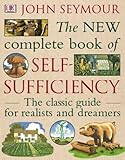
To start this conservation I decided to write a short review of the book of John Seymour, The New Complete Book of Self-Sufficiency: The Classic Guide for Realists and Dreamers, which for me is the absolute bible of self-sufficiency living. Written a few decades ago, it stands as bright and updated as ever, and it features an amazing ammount of information and resources of how to grow your own food, catch water, in very specific, non-sense and practical situations. This is a book for a lifetime.


Another very good book is Perennial Vegetables: From Artichokes to Zuiki Taro, A Gardener's Guide to Over 100 Delicious and Easy to Grow Edibles by Eric Toensmeier. It features an extensive list of many perennial vegetables, easy to grow, how to grow and prepare them, many of which have great potential for permaculture, and are not yet so well known. I have grown some of them this year with excellent results. This is practical Permaculture at its best. I also like very much his detailed style of writting.


Finally, the best general (and a fairly cheap one) Permaculture book for more urban settings, it's 21st Century Smallholder: From Window Boxes to Allotments: How to Go Back to the Land Without Leaving Home by Paul Waddington. This is not only a very practical book but an inspiring one. Particularly for people who live in cities, and would like to get more ecological and self-reliant. The book is divided in the sections garden and food, water, energy, waste, and has many little advices and tricks to reduce our ecological footprint and it also includes a few case-studies. Excellent book to start with.

Sunday, 6 September 2009

Self-sufficient gardening - Growing vegetables in a shade garden

Today we harvested a few more vegetables from the garden.
We harvested potatoes (which were grown under only 2 hours of sunlight!), plenty of celery, plenty of cucumbers (in half-shade), and a few tomatoes (which are now slowing due to the lack of sunlight). The tomatoes in shade grow, but the fruits stay green and grow slowly. However, with just 3 hours sunlight, the plants gave a nice crop.

Our pumpkin plant is growing very long, it has several female flowers, let's hope that we can harvest in a couple of months a dozen of nice muskat de provence pumpkins!

I cut the zucchini. The plants were not cropping anymore, due to the lack of sunlight. I guess they are not adequate to shade gardens, and occupy much space. It's much better to grow the prolific cucumbers!! Each plant gave about 5-10 fruits.
We also have some beans growing and cropping (of exotic varieties).

Our jerusalem artichokes, chinese artichokes, yacon, skirret, taro, scorzonera, and tiger nuts, are still growing, and hopefully producing a nice crop of roots under. The yacon plant is huge, with giant leaves and nearly 2 meters high. I had to protect it from the wind.

We also have one plant of celeriac and a few new kohl-rabi. And our good king henry is growing fantastically well, with plenty of its spinach-like leaves for us to cook. The swiss-chard is another crop growing very well even under the shade of a tree.

The nice thing is, with so much mulching and shade, there is no need to water the garden for several days in a row.

Monday, 6 July 2009

Update garden, 6 July 2009

I return back from a two-week vacations.
There was no need for watering. All the food garden was a jungle. The weather was quite cool and wet.
The jungle is crazy growing tomatoes, pumpkins, zucchini and beans. Maybe because I don't prune my tomatoes, and I don't stake any plant. I just let everything growing wildy and mixed. Talk about excessive companion planting!
So, I learnt a few valuable lessons: plan and organize your garden!
give enough space to each plant to avoid becoming a jungle!

Next year, I will make of companion planting a wise and careful choice, such as not mixing a big plant such a tomato or zucchini with small ones like swiss chard or tiger nuts, or mixing brocculi withbeets. The vines are particularly invasive!

About pruning: remember last year, I had only one tomato plant, I didn't prune it, and I got in the end more than 100 tomatoes, in only one plant! So, I keep not pruning; let them grow without limits.

There are now dozens of green tomatoes.
We harvested zucchini (unfortunely some were rot, due to the cold weather), swiss chard, lettuce, one big cucumber, beautiful kohl-rabi, and plenty of zucchini and nasturtium flowers for our salads. We have also dozens of nice brocculi!

The fact that the garden has only 3-4 hours of daily sunlight seems not to be a problem. Yes, I have more greens than fruits, and ripening is slower, but the crops still are fine.

Now, we got four days of warm, humid, thunder weather; today it rained heavily for five hours. Then, as it was very humid evening, we went slug hunting, and imagine... we catch 127 slugs! Half were around the compost bins! Usually, I am not a killer (!!), but I have had enough. I just cut them in half. I think tomorrow the birds are going to have a dinner party!!